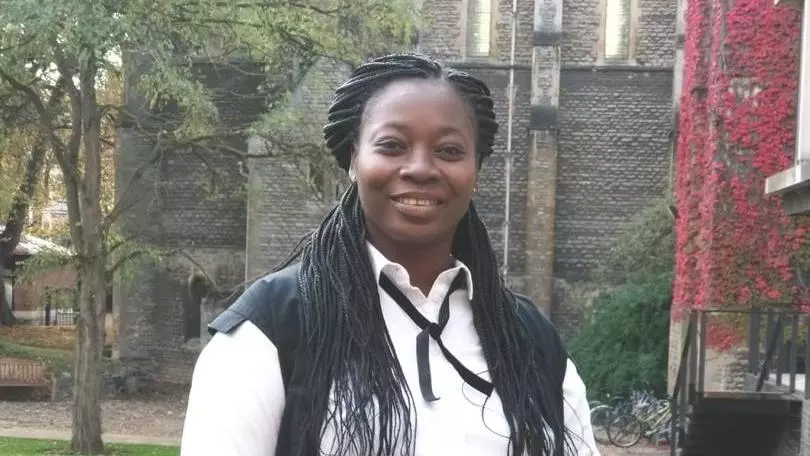
DPhil Student Spotlight: Naa Adjeley Mensah
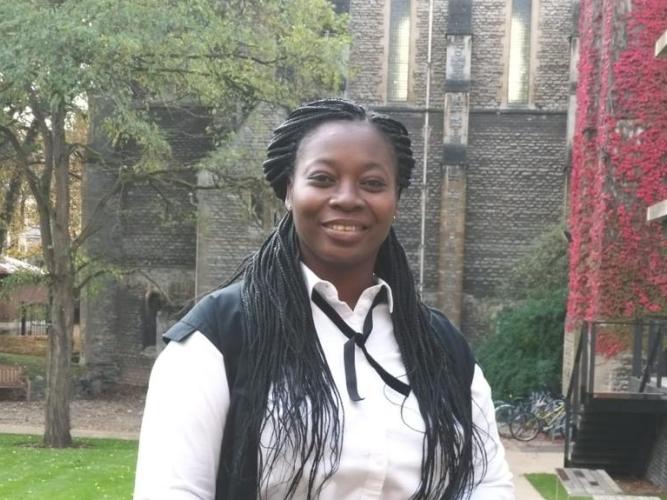
Naa is a DPhil Student and member of St Antony's College, supervised by Professor Heather Hamill. She is a Registered Nurse, who has lectured at the Ophthalmic Nursing School in Ghana, and also has a PhD in Population Studies from the University of Ghana, Legon.
Why do you study sociology?
As a nurse, I have always been interested in patterns of mortality and morbidity, which naturally drew me to demography and population studies.
Demography examines how societies change through three core processes: fertility, mortality, and migration, while sociology explains how social structures and relationships shape these patterns.
Studying sociology and demography together allows me to understand not only what is changing in populations, but also why and the social implications of these changes.
By combining both disciplines, I can develop a more complete and practical understanding of sociological theories, social dynamics, and societal change.
What first attracted you to the Department?
I have long been interested in further developing my studies in demography and sociology, and found the course offered by Oxford particularly interesting because sociology and demography were under the same roof.
I was initially hesitant to apply because I doubted my chances of being accepted or receiving funding, but a former lecturer and mentor supported me and connected me with a professor in the Department to discuss my application. Despite these initial fears, I applied and was thrilled to get in.
What do you enjoy most about studying in Oxford?
I remember a story a friend told me when I was young. He was very light-skinned and felt that teachers often singled him out because of his skin colour. I did not fully relate to this experience until I moved out of my comfort zone, relocating from Ghana to the United Kingdom, specifically Oxford.
Here, I feel I catch people's attention because I am different in many ways, not just in terms of colour. This attention and spotlight reaffirm my belief that I can make a meaningful difference. What matters to me is contributing to something that helps people. I know I can achieve anything through hard work and dedication.
In my DPhil, I face multifaceted challenges: balancing the roles of a parent and a student (especially with my children staying at home in Ghana), being a migrant, and conducting purely qualitative research in a Department that predominantly favours quantitative methods.
Despite these, however, the support I have received from my friends and colleagues on the DPhil has been a strong source of encouragement and a vital sounding board for my research. They lift me and are my cheerleaders.
What do you enjoy about living in Oxford?
I genuinely enjoy how Oxford is not only a beautiful city but also a vibrant community with friendly and welcoming people.
The diverse cultures, the multiracial backgrounds of its residents and its meals, the various tourist attractions, and the very neat environment not only enhance the city's charm but also my personal experience.
What are your research interests?
My research sits at the intersection of the sociology of health and the sociology of the family. I examine how union formation and dissolution are shaped by family dynamics, gender relations, and reproductive health, with an eye toward the intimate decisions and structural forces that pattern wellbeing across the life course.
I have so far produced close to 10 peer-reviewed articles, published in some of the highest-ranked journals in my field, with a couple more under review or in various stages of consideration for publication. I am authoring my thesis as a monograph and plan to publish it as a book after I finish my studies.
What is your thesis about?
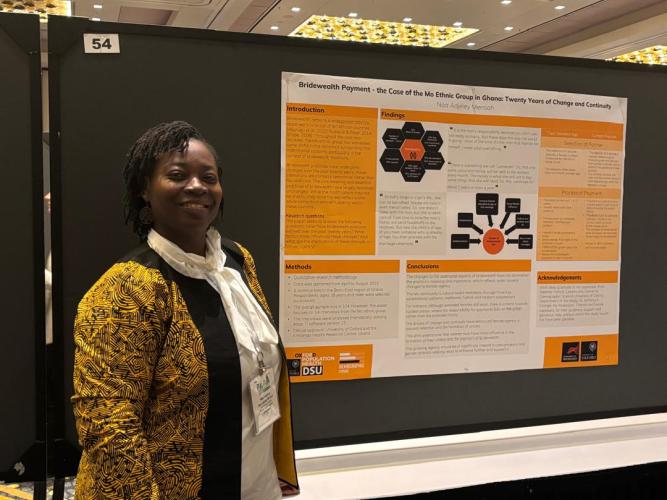
I examine traditions and gender dynamics in Ghana through qualitative research on bridewealth.
Guided by a theoretical framework that brings African feminist theory into conversation with resource and exchange theory, I treat bridewealth not as a fixed "tradition", but as a living institution; one that can both reproduce and contest gendered power. It identifies openings through which women can exercise greater agency within customary expectations.
In doing so, I contribute to wider debates on bridewealth in West Africa by showing both continuity and transformations and why those shifts matter. Also, extending existing agency concepts by developing the adaptive relational agency theory.
Who is your academic hero?
I admire my supervisor, Professor Heather Hamill. She has earned my admiration through our daily interactions, her unwavering support, and her research engagements on the African continent, including my home country.
Her passion for her research in Ghana is evident and inspiring, and she is committed to taking on students from diverse backgrounds and research interests. I am deeply inspired by her dedication and the passion she brings to her work.
Though we sometimes differ in our theoretical and methodological approaches, I appreciate our rich discussions and her support for my development as a researcher.
What do you hope to do when you finish your course?
I look forward to pursuing a career in academia and research, advancing knowledge and helping create safer spaces for vulnerable people, especially women and children.
What piece of advice would you give to prospective students?
To thrive and succeed, it is essential to build a network that supports and propels you forward. This valuable network is right around you, within the Department.
You can get in touch with Naa via email.