New study finds children learned 'little or nothing' during school closures, despite online learning
School closures in the last year have led to serious learning losses, with primary-age school pupils making virtually no progress studying at home, according to a new study by the Leverhulme Centre for Demographic Science (LCDS). Learning losses were particularly pronounced in families with low levels of education.
Published in Proceedings for the National Academy of Sciences (PNAS), the study 'Learning loss due to school closures during the COVID-19 pandemic' is authored by Dr Per Engzell, Postdoctoral Researcher at LCDS, and Sociology DPhil candidates Arun Frey and Mark Verhagen. The findings come from data gathered in the Netherlands, where schools closed for eight weeks in the first lockdown. The authors believe the findings are applicable to the UK and elsewhere.
The study shows that, despite high-quality remote provision, primary age students lost a fifth of the progress they would usually make in a year. This is equivalent to the time they spent outside the classroom. The impact was even more severe for children from disadvantaged backgrounds.
Read the full coverage on LCDS Website
Read the full study on the PNAS website
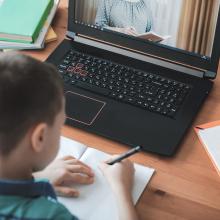
Photo credit: Shutterstock