
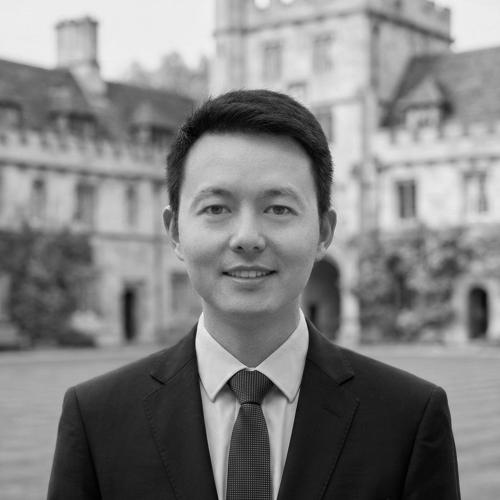
Fanqi is a UKRI Metascience AI Early Career Fellow in the Department of Sociology and a Junior Research Fellow at Wolfson College. His research bridges AI and the social sciences, harnessing computational methods and large-scale data to illuminate patterns within complex societal and natural systems. His current work explores the transformative impact of AI on society and human behaviour.
Prior to his current role, he was a Postdoctoral Fellow in the same department, working in parallel on the Wellcome Trust–funded FORESFA project on global substandard and falsified medicines and the European Research Council–funded CrimGov project on global organised crime and governance. His research has appeared in leading interdisciplinary journals, including Science, Nature Cities, Nature Communications, PNAS, and PNAS Nexus.
He holds a PhD in Engineering Mathematics from the University of Bristol, completed under the supervision of Professors Thilo Gross, Martin Homer, and Nikolai Bode. His doctoral research employed a combination of top-down (model-driven) and bottom-up (data-driven) approaches, drawing on machine learning, agent-based modelling, and network science to investigate complex systems.
Beyond his research, he has taught undergraduate and postgraduate courses in sociology, mathematics, and computer science at Oxford and Bristol. He supervises MSc students in the Department of Sociology and serves as a college advisor at Oxford. He sits on the editorial board of the Journal of Applied Spatial Analysis and Policy and reviews for journals such as Nature, Theory and Society, and Population Studies, as well as funding bodies including UKRI, the Software Sustainability Institute, and the Oxford Social Sciences Engagement Fellowship.
Research areas: AI, governance, complex systems, public health, computational social science, data science, social network analysis, agent-based modelling, game theory