

USAID cuts create 'long-overdue opportunity' to rebuild global health data system
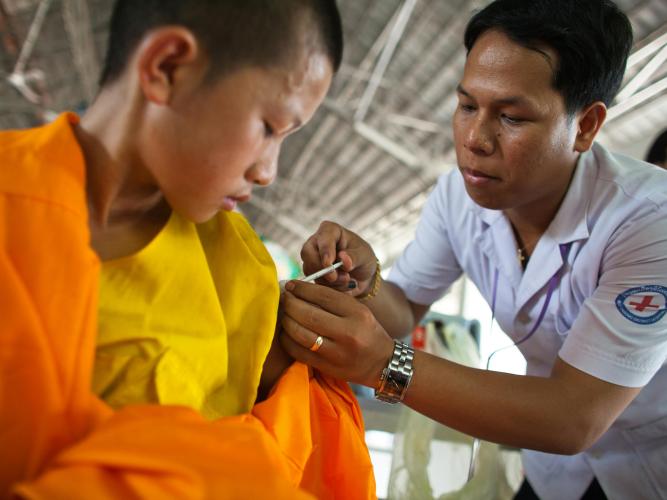
The dismantling of the US Agency for International Development (USAID) has led to the closure of its flagship Demographic and Health Survey (DHS) Program - long regarded as one of the world's most important sources of population health data in low- and middle-income countries (LMICs).
But in a new opinion piece for PNAS, Postdoctoral Research Fellow Dr Aasli Abdi Nur and Associate Member Dr Jasmin Abdel Ghany argue that the cuts to USAID present a unique opportunity to reform and strengthen demographic and health survey data across the globe.
For decades, the DHS was instrumental in improving the evidence base for health policies and interventions, particularly in Sub-Saharan Africa and Central and Southern Asia. Its data has been critically important in many fields, including maternal health, child health, immunisation, HIV/AIDS, maternal mortality, child mortality, fertility, family planning and reproductive health, malaria, and nutrition.
While a three-year grant by the Gates Foundation currently enables data access and data collection in some countries, the future of the DHS Program remains uncertain beyond this period.
The scale of its contribution has been substantial - a recent UN analysis found that DHS surveys provided over half of the data points on national child mortality rates between 1950 and 2023, many of which were for LMICs. The Program helped fill critical data gaps and supported countless country-led initiatives.
However, the authors contend that the collapse in USAID support, while regrettable, presents a long-overdue opportunity to reform the DHS model. They argue that a revitalised system should be country-led, less expensive, and more equitable - and that data should be distributed freely across the world without US gatekeeping.
The proposal calls on country statistical offices to host and disseminate their own DHS datasets via national platforms to ensure long-term stability and local stewardship. Unrestricted access should be granted to governments, non-profit researchers, scholars, and students, given that the DHS data have already been anonymised and, in most cases, many years have passed since data collection.
Beyond the national storage of the data, the authors suggest depositing harmonised datasets in established global repositories such as IPUMS Global Health and the Gateway to Global Aging Data, ensuring broader accessibility and preservation.
To help build this future model, the authors argue that researchers could turn to underutilised high-quality and diverse data sources. Increased use of alternative data sources would help streamline future data collection across surveys and support the development of new survey and analysis tools. Diversifying population data inputs could minimise redundancy in future data collection efforts and make them more cost-effective.
They also call for expanded cross-national research collaborations, particularly between scholars in LMICs and those in high-income countries, to harmonise different data sources. Making methodologies publicly available would strengthen transparency and reproducibility. Embedding this work within local institutions such as national statistical offices and universities could further lower costs.
Dr Jasmin Abdel Ghany said:
We must preserve access to DHS data as a global public good. This is the time for countries and stakeholders to develop a new model of data collection, harmonisation, ownership, and distribution.
The DHS Program made significant progress in ensuring that countries implemented surveys and directly owned the data. Future surveys must expand national control over survey content while maintaining international comparability. Data systems should continue to serve domestic policy needs while informing global health priorities.
Achieving this transition will require sustained, multi-institutional cooperation. Donors, governments, and research institutions must invest in durable, high-quality data systems that prioritise standardisation and harmonisation while placing LMIC institutions at the centre of governance and expertise.
The authors conclude:
Equity and accessibility must be the central principles that guide how we rebuild DHS data collection and access.
Only then can we empower countries to achieve health and development goals.
Original Publication
J. Abdel Ghany, A.A. Nur, K.L.D. MacQuarrie, J. Wilde, E.A. Sully, M. Karra, U. Gazeley, B.M. John, & L. Montana, In the wake of USAID cuts, we can create a Demographic and Health Survey Program founded on more equitable data infrastructure and stronger research integrity, Proc. Natl. Acad. Sci. U.S.A. 123 (9) e2513242123, https://doi.org/10.1073/pnas.2513242123 (2026)