New index assesses LGBTIQ+ inclusion in truth commissions
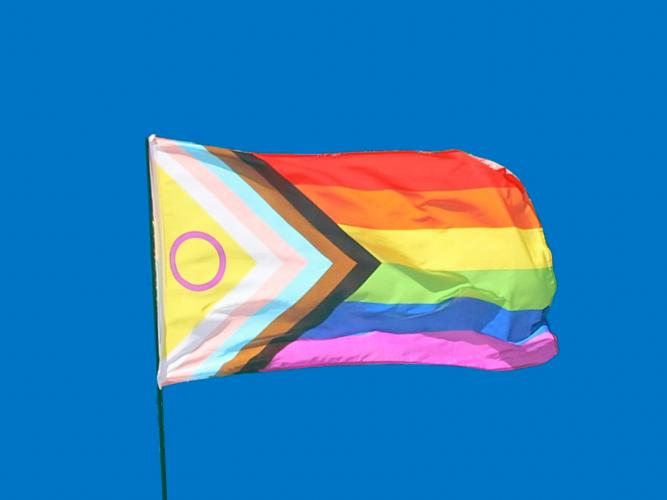
DPhil student Emma Pritchard has developed a new Index of LGBTIQ+ Inclusion and Agency, offering policymakers a way to better understand how truth commissions engage with and represent LGBTIQ+ communities.
The index provides a new way to measure whether post-conflict justice processes meaningfully include LGBTIQ+ people, and whether those communities have agency in shaping how their experiences are recorded.
Truth commissions are a central mechanism of transitional justice, alongside trials and reparations. These state-led, temporary bodies investigate past violence and human rights abuses, bringing together testimony from victims, perpetrators, and other actors to establish an official record of conflict.
When successful, these processes allow marginalised groups to be recognised as subjects of human rights, seek redress for abuses against them, and gain representation in the official record.
However, LGBTIQ+ people have often been excluded through what is described as a "politics of not-knowing", in which crimes against them are ignored or left undocumented.
Emma's research addresses this gap by introducing a systematic way to evaluate both inclusion and agency within truth commission processes.
Her study analyses the seven truth commissions that have referenced LGBTIQ+ people to date, supported by interviews with key figures involved in the commissions and LGBTIQ+ rights struggles in these countries. The commissions examined took place in South Africa, Peru, Paraguay, Ecuador, Brazil, Bolivia and Colombia.
The index consists of nine indicators measuring different aspects of inclusion in final reports. These include whether LGBTIQ+ people were included from the commission's design stage or added later, whether a range of LGBTIQ+ identities is represented, how many violations against LGBTIQ+ people are documented, and whether final recommendations address LGBTIQ+ rights protections.
Emma explains:
This index allows us to determine the current state of inclusion, including its limitations and failures, and from here build a platform for the fuller representation of queer voices and experiences in periods of transition.
The study found significant variation across the seven truth commissions studied. In some cases, LGBTIQ+ inclusion occurred only after sustained activism and lobbying by community groups, while in the most recent truth commission in Colombia, it was embedded in the commission's mandate from the outset.
Many commissions were constrained by the lack of existing data on abuses against LGBTIQ+ people, along with budgetary constraints on collecting information. The recent Colombian commission is notable in partnering with civil society organisations to gather and submit evidence for inclusion in the final report.
The study also found that there is a disparity in which LGBTIQ+ identities are represented, and that the majority of commissions failed to include final recommendations specifically addressing LGBTIQ+ communities. This, Emma argues, raises questions about states' long-term commitment to protecting the rights of LGBTIQ+ communities.
Crucially, the study emphasises that inclusion alone is not enough. Meaningful participation requires agency - the ability of individuals and communities to shape how they are represented and positioned within post-conflict societies. This study finds that higher levels of inclusion in a truth commission do not necessarily correspond to greater agency.
By measuring both inclusion and agency, the new index captures multiple dimensions of identity and lived experience, while avoiding the limitations of collective acronyms such as LGBTIQ+, where visibility for some groups can be mistaken for inclusion of all.
The study concludes that the index can help inform future policymaking and support the design of transitional justice mechanisms that more accurately reflect the diverse experiences of LGBTIQ+ people, moving beyond narrow or binary frameworks.
Original Publication
Pritchard, E.C. 2025. 'Si no hay datos, no hay abuso': LGBTIQ+ inclusion and agency in truth commissions, International Affairs, iiaf232, https://doi.org/10.1093/ia/iiaf232