From adolescence to adulthood:
How empowerment programmes shape women's lives
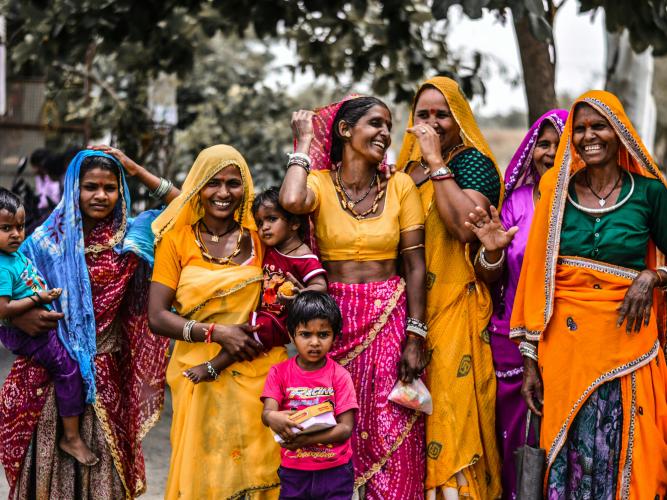
For International Women's Day 2026, we explore how participating in multidimensional empowerment programmes during adolescence shapes women's lives in adulthood.
Dr Prashant Poddar, along with Dr Somdeep Chatterjee of the Indian Institute of Management Calcutta, study the long-lasting effects of the Rajiv Gandhi Scheme for Empowerment of Adolescent Girls (SABLA), a large-scale women's empowerment intervention introduced in India in 2010.
SABLA was designed to promote the self-development and empowerment of girls aged 11-18 by providing them with support across multiple dimensions. The programme provides iron and folic acid tablets, nutrition and health education, life skills training, sexual and reproductive health education, information on accessing public services, and vocational training.
By adopting a "life course approach", SABLA aims to promote timely investments in health and human capital for girls, in order to improve their outcomes in later life.
Lower exposure to domestic violence
Dr Poddar and Dr Chatterjee found that participants in the SABLA programme later reported facing lower levels of intimate partner violence (IPV), including emotional and physical abuse and controlling behaviour.
Globally, nearly 30% of women have experienced IPV within their lifetime - defined as behaviour within an intimate relationship that causes physical, psychological or sexual harm.
The authors analysed the 2015-16 National Family Health Survey for India and found that exposure to the SABLA programme is linked to a significant drop in such violence against women.
These reductions may stem directly from the programme's curriculum, which includes modules addressing domestic violence and marital rape. However, the authors also highlight indirect pathways - improved health, higher literacy, and better labour market opportunities for women may also help to reduce IPV.
For example, improved job opportunities (often dependent on a higher level of literacy), can result in lower IPV for women if it raises their bargaining power in the household or reduces their exposure to their husband. Women enrolled in SABLA had a higher literacy level and were more likely to be employed than those not in the programme.
A shift towards cleaner cooking fuels
Dr Poddar and Dr Chatterjee also study the impact of the SABLA programme on the choice of cooking fuel within households.
Globally, around 2.5 billion people - or one-third of the world's population - cook using open fires or use 'dirty' fuels, such as wood, charcoal, animal dung or agricultural waste. In India, more than 30% of households still depend primarily on firewood for cooking.
The use of polluting fuels can lead to severe health hazards, especially amongst young children. Estimates suggest that around 3.5 million people around the world each year die due to diseases caused by household air pollution.
While fuel choice is often linked to household income, level of education, and cultural norms, less attention has been paid to women's role in these decisions - despite women bearing the greatest health burden from indoor air pollution and being primarily responsible for cooking in many developing countries.
Using data from the District Level Household and Facilities Survey, conducted in 2012-2014, the authors found that women exposed to the SABLA programme were 5.7% more likely to use cleaner cooking fuels such as Liquefied Petroleum Gas (LPG) post-marriage, when compared to women who were not exposed.
The authors suggest that this effect is driven by greater health awareness and empowerment among participants. The health education provided through SABLA may have increased women's understanding of the risks associated with traditional cooking methods, particularly for children.
At the same time, broader empowerment - including improved education and greater involvement in household decision-making - may have given women more influence over fuel choices.
However, the researchers caution that the overall impact on clean fuel use is modest. Deep-rooted patriarchal norms and household budget constraints continue to limit the adoption of modern cooking fuels.
Beyond single-issue interventions
The findings underscore the broader value of multifaceted empowerment programmes. Rather than targeting a single outcome, initiatives like SABLA simultaneously strengthen health knowledge, education, economic participation and women's agency within the household - areas that can reinforce one another over time.
By analysing a multi-year, multi-pronged programme targeted at adolescent girls, the authors are able to explore the long-lasting effects of investing in women's skills, health and overall development early in life. Improvements in one domain, such as nutrition or education, can generate ripple effects across others, influencing outcomes that the programme was not explicitly designed to address.
From a policy perspective, this is particularly significant. SABLA was not created to alter household energy choices or reduce intimate partner violence, yet the evidence suggests it may have contributed to progress in both areas.
Overall, the results suggest that investing in adolescent girls can deliver lasting benefits not only for women themselves, but for households and communities more widely.
Original Publications
Chatterjee, S. and Poddar, P. (2024). Women's Empowerment and Intimate Partner Violence: Evidence from a Multidimensional Policy in India. Economic Development and Cultural Change, 72 (2). https://doi.org/10.1086/721281
Chatterjee, S. and Poddar, P. (2026). Do 'Women hold up half the sky' in fuel choices? Revisiting the role of adolescent empowerment in a developing country context. World Development, 202,
107355. https://doi.org/10.1016/j.worlddev.2026.107355.